
From Media Hype to Scientific Reality
It’s everywhere. In the media, at work, among friends… Since the arrival of ChatGPT, artificial intelligence seems to be on everyone’s lips. It fascinates, intrigues, and sometimes even worries.
Some see it as a technological revolution capable of transforming the way we work, automating our tasks, and reshaping how we think. But beyond the buzz, what does “AI” really mean? And above all, how do we use it concretely at Bioeureka?
A Biological Origin Before a Technological One
Contrary to what one might think, artificial intelligence is not particularly new. Its roots date back to the 1950s, long before the arrival of Google or smartphones. At that time, researchers such as Alan Turing laid the foundations of what would become AI by imagining systems capable of simulating certain human cognitive functions, such as learning or decision-making.
But AI did not originate from the tech world as we know it today. It was born from a scientific ambition: understanding how the brain works. To achieve this, biologists, neurologists, and mathematicians began modeling the mechanisms of human and animal thought.
This is how the first artificial neural networks emerged, directly inspired by biological neurons. From its earliest days, AI developed at the crossroads of biology, mathematics, and computer science.
Since then, it has evolved rapidly, driven by computing power, the explosion of data, and advances in deep learning. But the core idea remains the same: creating systems capable of learning, recognizing, and making decisions based on complex information.


AI at Bioeureka: A Practical and Thoughtful Approach
At Bioeureka, we do not use AI simply for the sake of using AI. We design it as a tool in service of microbiology, capable of providing concrete answers to real-world challenges. Our goal is clear: to make analyses faster, more accurate, and more accessible.
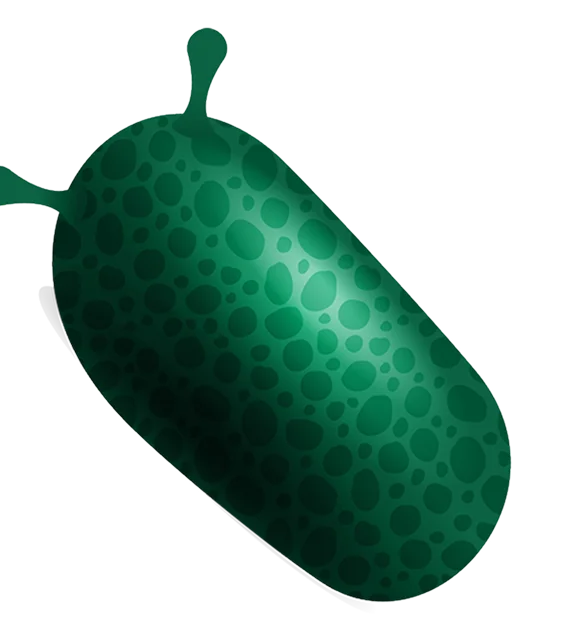
Our models rely on multi-source data, both visual and textual. During analysis, users can enrich the results by adding contextual information such as culture conditions or specific observations. This interaction makes the models more adaptive and more relevant in real-world environments. The models we have developed are capable of recognizing bacteria stained using the Gram method. By combining microscopic images with descriptive data, we go beyond the limitations of traditional methods while strengthening the reliability of the results.
But we must remain clear-eyed. AI will not change the world on its own. It becomes truly useful when applied to a concrete challenge within a clearly defined field. It is a tool, not a universal solution. And like any tool, it has its limitations. It can be opaque—the famous “black box”—energy-intensive, and it raises important questions about data processing, security, and digital sovereignty.
That is why, at Bioeureka, we have chosen a thoughtful approach to AI. Each model is designed with care, taking into account its impact, relevance, and real usefulness for our users.
Demystifying AI: A Key Challenge
One of the major challenges we face in the adoption of AI is its lack of transparency and the general misunderstanding surrounding it. Too often, it is perceived as a magical or inaccessible technology. That is why we are launching this series of articles: to explain, simplify, and share our vision of AI without unnecessary jargon.
We are convinced that developing an AI culture is essential. Helping users understand how models work, what their limitations are, and how to interact with them effectively is just as important as the technology itself.
In the upcoming articles, we will address concrete questions about model reliability and transparency, ethical and regulatory challenges, as well as team training for these new tools.
AI is not magic. It relies on data, algorithms, and above all, on the humans who design and use it. At Bioeureka, we believe in responsible, useful AI that is centered on real-world needs.